Last week I found an injured horse nothing too bad just a scrape on the ankle that needed to be taken out of the mud so that it wouldn't get infected. I could just hear everybody mentally sighing in their heads (including my own) about having to put her in isolation, when all of our isolation pens are really only meant for the summer.
Then yesterday I of course had to find ANOTHER problem. I was holding one of the horses because we were trimming his feet no big deal, and well I felt a few little bumps from scabs or something. So I took a closer look because I like to know every inch of my animals bodies about as well as I know my own. Well as I looked I realized they were scabs and was wondering what could have caused the scabs. It is the middle of winter and there are absolutely no flies around.
So what could be causing these scabs?
Taking a very very close look, I found these little tiny yellowish bugs. I almost thought they were something, it didn't completely freak me out until I realized they were moving!!!!! I then had my friend also look at them to make sure I was not going insane and even she agreed that it was some sort of external parasite. Now external parasites are not something I have dealt with a lot over the years, except the garden variety of flies. So of course I called an expert and she told me that they were either bots or lice.
Upon some research when I got home I learned a few things about both bots and lice. Can you guess which is which?
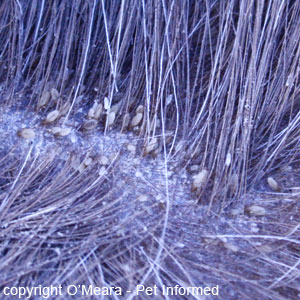

Well the top one is lice and the bottom is a bot fly. I guess my worst fears came true... Safe Haven has lice. The other deciding factor is that bots are around in the spring and summer months, where as lice thrive in the winter months.
Interesting right? I thought for sure that both would only live in the summer months. And also I found the lice on the neck/wither areas of the horse, and that is also the most common place you find lice. There are also two types of horse lice the biting type and also the sucking type of lice. I am pretty darn sure we have the sucking type since I watched one attach to one of the scabs and start sucking blood. The other type of lice is the type that eats the dandruff off of the horses. There are a variety of treatments and medicines out there that can be used. Though I found one website with a lot of home remedies and the one that intrigued me the most with how thorough and easy it is plain white vinegar. Who would have thought??? So next time I find lice on a horse I am going to go into the pantry and grab a bottle of vinegar to spread onto the affected areas.

No comments:
Post a Comment